
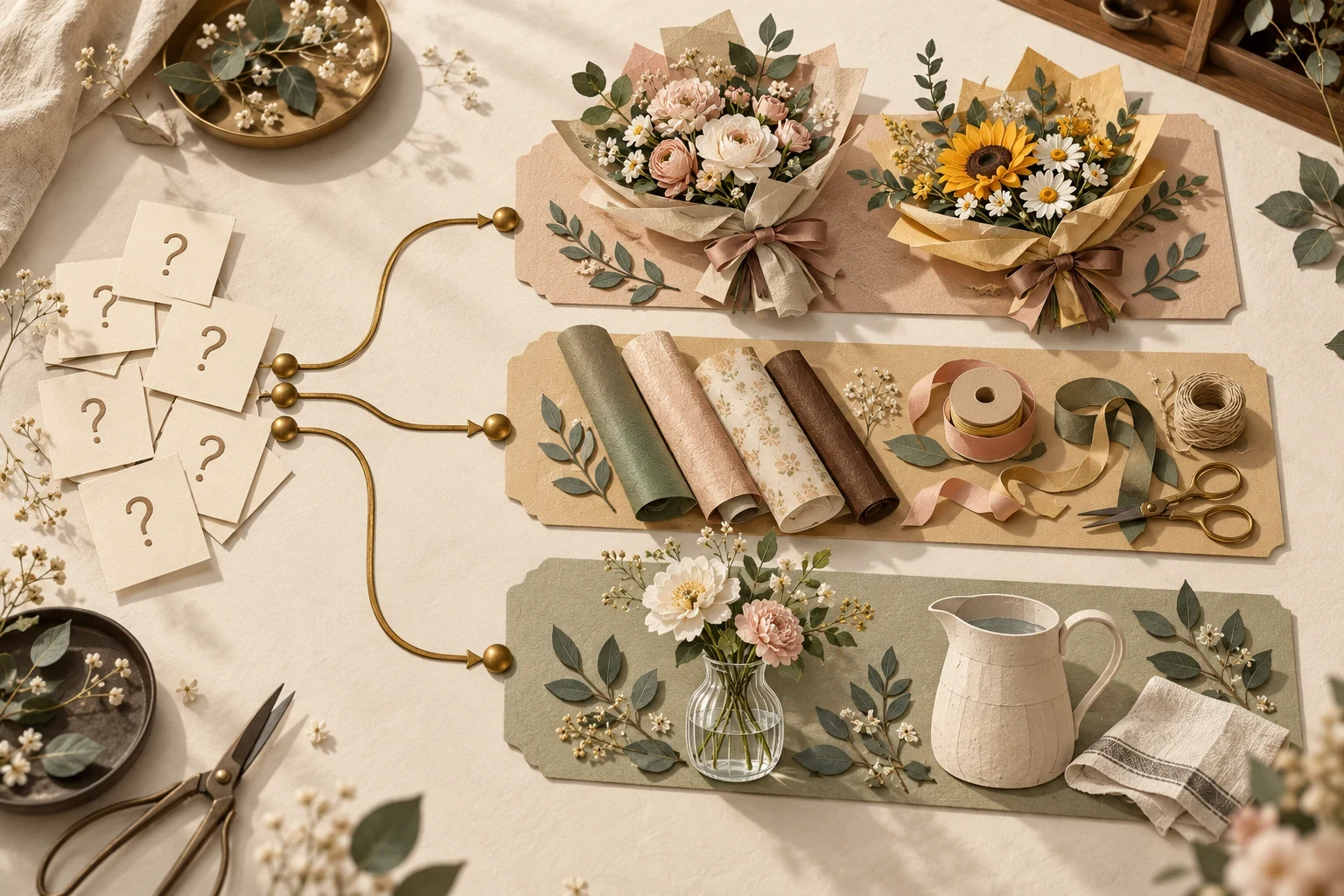
Product photos, practical tips and behind-the-scenes posts can all belong on a Facebook Page. They can also feel disconnected. The useful question is what each group of posts helps a customer understand or decide. A content pillar is a recurring theme built around a specific audience need. Start with customer questions, check what your business can genuinely explain, and turn that material into individual posts.
Separate the pillar, the post idea and the format
“Help customers choose flowers as a gift” is a pillar. “Would a bouquet or an arrangement suit a small desk?” is one post idea within it. A side-by-side photograph with a caption is a format. These three levels define the ongoing subject, the question this post answers, and the way you present it.
Labels such as “beautiful pictures,” “sales content” and “helpful tips” leave much of the thinking to the writer. Name a pillar after a task the customer needs to complete: choose well, understand the work, or get more from the product. A useful name lets two writers independently suggest relevant ideas.
Collect questions before filling the calendar
- Gather questions people actually ask. Review inquiries, quotation discussions and after-sale questions. Keep only what is needed for planning; remove names, contact details and private circumstances.
- Group them by the decision involved. “Is there a smaller version?” and “Will it take up too much desk space?” may belong together. Two questions mentioning the same product do not necessarily serve the same need.
- Check whether you can answer reliably. Identify the person who can confirm the facts and the photographs, process details or instructions available. Record missing information instead of asking the writer to guess.
- Try several distinct post ideas. If they all repeat the same answer, the pillar may be too narrow. If almost any subject fits, tighten its boundaries.
Once you have useful themes and enough material, put the posts into a Facebook content plan. Scheduling decides sequence, timing and ownership. Choosing pillars decides which subjects deserve the work in the first place.
A worked example: three pillars for Moc Flowers
Moc Flowers is a fictional business used to explain this planning method. The questions and examples are illustrative, not customer research or results from a real client project.
1. Choosing flowers for the recipient and the setting
- Customer question: “What would work on the recipient’s small desk?”
- Post idea: Show a bouquet and a small arrangement on the same desk, with verified dimensions for the photographed items.
- Material needed: Two available products, comparable photographs, confirmed measurements and clear information about any vase or container included.
- Next step: Invite customers to describe the setting and their budget so the shop can suggest suitable options.
The same pillar could address colour preferences, wrapping choices or carrying a gift to an event. Each post needs a different decision to help with. Replacing the bouquet photograph while repeating the same advice does not automatically create a useful new post.
2. Understanding what goes into the finished product
- Customer question: “Why do two arrangements using similar flowers look different?”
- Post idea: Use real workshop photographs to show how paper, foliage and finishing choices change the arrangement.
- Material needed: A process confirmed by the florist, photographs of the actual product and an accurate list of what the order includes.
- Next step: Explain which details customers can choose and which depend on available materials.
Behind-the-scenes content should reveal something useful. A workbench photograph accompanied only by “made with care” gives readers little to examine. Avoid adding claims such as “longest lasting” or “the best quality” without appropriate support.
3. Caring for flowers after delivery
- Customer question: “Should I unwrap this bouquet and put it in a vase straight away?”
- Post idea: Explain the appropriate next steps for a specific bouquet sold by the shop.
- Material needed: Instructions checked by someone with relevant expertise, plus photographs of the verified steps.
- Next step: Tell customers which product details or photographs to provide if they need more help.
This is a proposed editorial brief, not universal flower-care advice. If the shop cannot yet confirm the instructions, the post should wait for the missing material.
A short worksheet for choosing a pillar
Complete these six entries for each proposed theme. An existing spreadsheet or a simple note is enough.
- Reader: Who faces this situation?
- Task: What should they understand or be able to decide after reading?
- Questions: Record the actual meaning of each question. Distinguish observed questions from ideas you still need to test.
- Evidence and reviewer: What photographs, facts or process details are available, and who will verify them?
- First post: Define one question, one main answer and a suitable format.
- Useful feedback: What are readers still asking? Do they provide the details needed for a relevant follow-up, or say they now understand how to choose?
A missing customer task often means the theme exists mainly to fill publishing slots. Missing evidence means someone needs to gather it, or the team should start with a better-supported theme.
When to merge, split or pause a pillar
Merge two themes when they repeatedly produce the same questions and answers. Split a theme when it contains different customer needs that make individual posts hard to focus. Pause a theme when you lack reliable material or the subject no longer relates to what the business provides.
There is no need to force every Page into the same number of pillars or a fixed posting ratio. Choose a manageable set that your team can support with real material. When reviewing posts, read the responses and consider the circumstances rather than judging the entire pillar from one post’s likes. Plenty of reactions also do not establish that a post generated sales.
If several people write for the Page, share the pillar names, a few example briefs and language preferences. A consistent Facebook brand voice can connect the posts without making them all sound identical.
Make one pillar workable before adding more
Choose one recurring customer question, identify material you can verify and draft the first brief. Then try two different questions in the same group. If each leads to a distinct, useful answer backed by available information, you have a workable theme to test.
For help turning your themes into posts, images and publishing on an agreed schedule, explore Mạch’s Facebook content service. The starting point should be your products, customer questions and source material, rather than a generic list applied to every business.