

Someone searching for “how to choose a desk for a small room” needs a way to assess the space and compare options. Someone searching for “buy an 80 cm desk” may already be looking for a specific product, a price and delivery details. Both searches concern desks, but the pages that help those readers will do different jobs.
To identify search intent before writing an article, work out what the reader wants to accomplish, review relevant search results, and choose the page type that can answer that need. Then turn the decision into a clear writing brief. This guide provides a practical process, a worked example and a template for recording what you find.
Define the reader’s task, not just an intent label
Search intent is the purpose behind a search. Calling a query “informational” can be useful, but it leaves several writing decisions unresolved. Who needs the answer? What do they already know? What should they be able to do after reading?
For a small-room desk guide, a useful task statement might be: “A person setting up a compact workspace needs to measure the available area and choose practical dimensions before browsing products.” That statement suggests specific sections about measuring, equipment and chair clearance. A long introduction about the history of office furniture would add little.
Google explains that its systems consider the meaning of a query as well as context such as language, location and settings. Matching the same words alone does not settle which page will be useful. See Google’s explanation of how Search ranks results.
Use four practical starting points
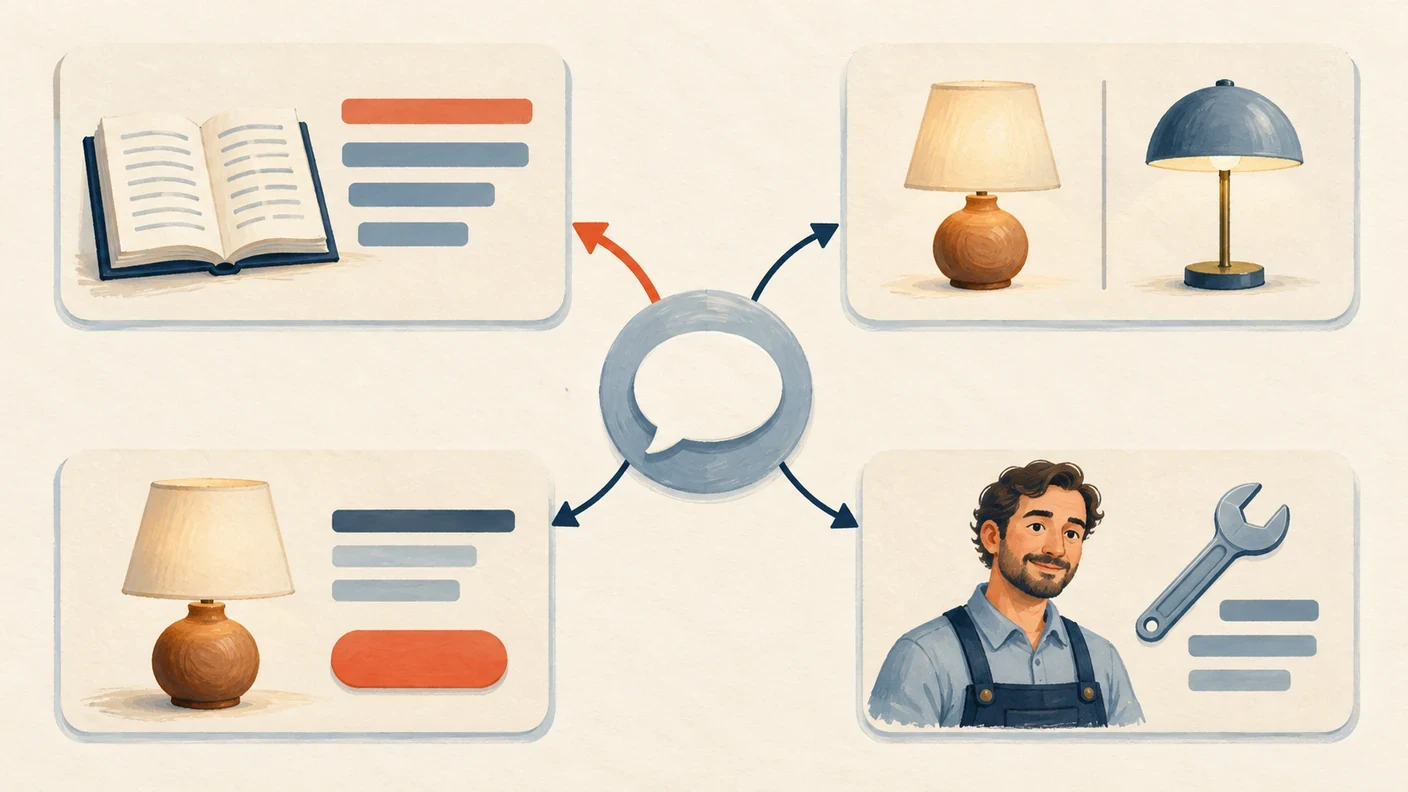
These categories are useful editorial shorthand, rather than four rigid boxes that every query must fit. A search can contain more than one need.
- Learn or do something: “how to measure space for a desk” calls for instructions, possibly with a diagram or checklist.
- Compare options: “folding desk vs fixed desk” calls for decision criteria, trade-offs and the conditions under which each option fits.
- Buy or hire: a specific product or service query may be best served by a product, category or service page with accurate commercial details.
- Reach a known destination: a brand, login or contact query may be asking for a particular page rather than a new article about the topic.
Words such as “how,” “best,” “price” and “buy” offer clues. They do not make the decision for you. “Website writing prices” and “why website writing prices vary” may call for different answers even though their wording overlaps.

A six-step search intent research process
1. Write an initial hypothesis
Start with the exact query. Complete this sentence: “The searcher is trying to… and needs… so they can…”. Label it as a hypothesis until you have checked it.
Compare it with genuine questions from sales or customer support, removing personal details from your editorial notes. If customers repeatedly ask whether a desk will fit but have not measured their room, a measuring guide may be useful. That does not establish every searcher’s room size, budget or preferred style.
2. Check the relevant language and market
Search the main query and a few close variations. Record the date, target market, language and any device context that matters. Keep ads separate from organic results, and note other result types such as maps, images, video or shopping listings.
Treat what you see as a view of the current search landscape. An incognito window does not create a universal result set. If you publish in two languages, research each audience separately rather than assuming a translated keyword represents the same need.
3. Open the pages and record three things
- Page type: article, category, product, service page or tool.
- Answer format: steps, selection criteria, comparison, a collection of examples or a short explanation.
- Reader outcome: what can someone understand, do or decide after using the page?
Read the main content instead of judging from the result title alone. A page called a “buying guide” may be little more than a product list. A category page may have genuinely useful filters and selection advice. Note the strongest answers and unresolved questions without turning a competitor’s headings into your assignment.
4. Separate a consistent pattern from mixed intent
If the relevant pages repeatedly serve the same task, that gives you a clearer starting point. If the results mix tutorials, commercial pages and tools, record the ambiguity.
Then consider who your site can help well. You might narrow “small desk” to “how to measure a bedroom corner for a desk.” If the task is still unclear, or you lack the information needed to answer it, hold the topic until you have better evidence. A vague query does not obligate you to publish a vague article.
5. Choose the destination before creating a URL
Check whether an existing page already answers the same reader task. Improving that page may be more useful than publishing another version. For a buying or hiring need, review the product or service page first: does it explain the offer, relevant conditions and next step?
An educational article can still link to a service. A guide to planning website content might help readers make their own plan, then offer support with implementation. The guide should deliver its promised explanation before making that invitation.
6. Turn the decision into a writing brief
Define one primary question, the result readers should achieve, the necessary sections and what the piece will leave out. Only then settle the headline, outline and call to action.
For a larger publishing schedule, record the decision in your website content plan. It becomes easier to spot two assignments that would answer essentially the same question.
Worked example: three searches about a small desk
The examples below are hypothetical editorial decisions, not observations of live search rankings or results from a client project.
“How to choose a desk for a small room”
Reader task: establish practical criteria before shopping. Suitable direction: a guide to measuring the space, listing equipment, allowing room to sit and move, and comparing desk layouts.
An outline could cover the measurements to take, the work setup to accommodate, storage trade-offs and a final fit check. Include specific dimensions only when supported by an appropriate source or clearly identified as example measurements.
“Folding desk vs fixed desk for a home office”
Reader task: choose between two approaches. Suitable direction: compare storage needs, frequency of use, equipment and the specifications of actual models.
Avoid claims such as “all folding desks are unstable.” Without model-specific evidence, explain what buyers should check: the stated load limit, locking mechanism and manufacturer’s conditions of use. A comparison becomes useful when readers can apply its criteria to their own shortlist.
“Buy an 80 cm wide desk”
Reader task: find a product that meets a clear size requirement. Suitable direction: a relevant product page or filtered category with accurate dimensions, photos, pricing and confirmed delivery information.
A long blog post on the benefits of compact furniture cannot replace those details. If the business does not sell a matching product, the page should not imply otherwise.
A search intent brief you can reuse
Keep observations separate from your editorial conclusion. That helps the writer see what has been checked and what still needs confirmation.
- Main query and close variations: …
- Audience and task: …
- Research context: date, language and target market …
- Pages reviewed: URL, page type and question answered …
- Conclusion: primary need, secondary need and remaining uncertainty …
- Chosen destination: existing or new URL, with a reason …
- Reader outcome: what the page should help someone understand, do or decide …
- Required evidence: images, specifications, policies, examples or a subject-matter reviewer …
- Out of scope and appropriate next step: …
Once those decisions are clear, move into the article-writing process. If you cannot define the reader outcome, adding more headings will not resolve the gap.
Revisit the hypothesis after publication
The Google Search Console Performance report provides query and page data, including impressions and clicks. Once the page has useful data, review which relevant questions are bringing it into search results.
Also consider the questions readers continue to ask. If they still need information the article promised to provide, review that section. If the observed queries point toward a buying need, inspect the relevant commercial page rather than inserting sales copy throughout the guide.
A low click count alone does not establish an intent mismatch. Visibility, the title and the presentation of the result also need consideration. Sparse data deserves caution; one quiet day is not a sound reason to change the entire assignment.
Common questions about search intent
Can a keyword tool identify intent for me?
A suggested label can help you sort a list. Before commissioning the article, open relevant results, inspect your existing pages and check real customer questions. A tool does not know every detail of your offer or what evidence your business can provide.
Should I copy the structure of the top results?
Use them to understand the answer readers may expect. Build your own structure around the information and practical value you can contribute. Google’s people-first content guidance encourages useful original value rather than merely summarizing other pages.
Does matching intent guarantee rankings?
No. It helps define the page’s job. The quality and reliability of the answer, technical conditions and other factors still matter. An intent label is not a promise of rankings or inquiries.
Start the next article with a clear job
Before assigning a draft, agree on three things: what the reader needs to accomplish, which page should answer, and what evidence you can supply. Those decisions give both the writer and the reviewer a concrete standard to work toward.
For help turning website topics into articles, images and CMS-ready pages, explore Mạch Nội Dung’s website content service or message @milanoinies on Telegram to discuss what you need.